IRON HORSE HISTORY
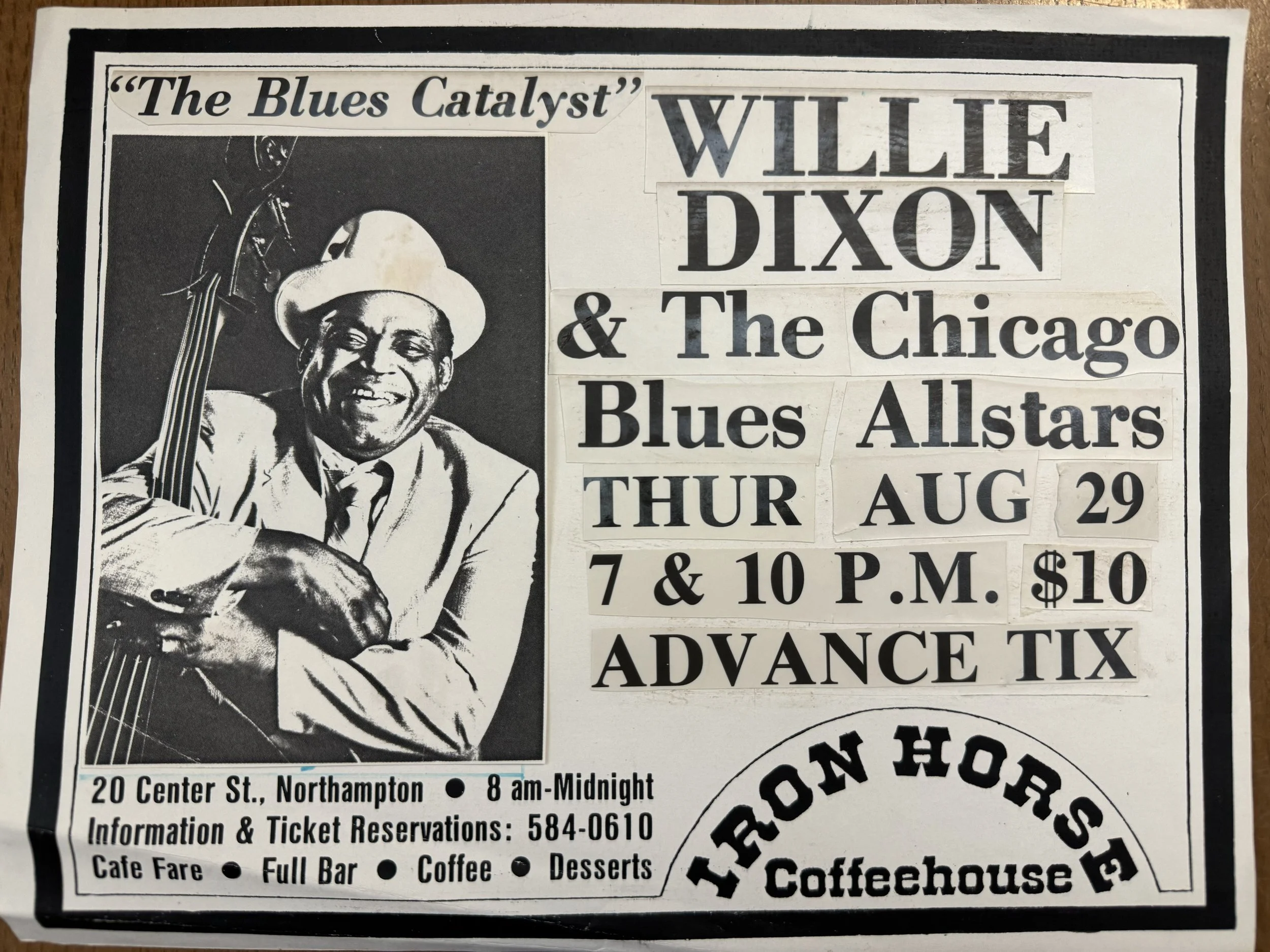
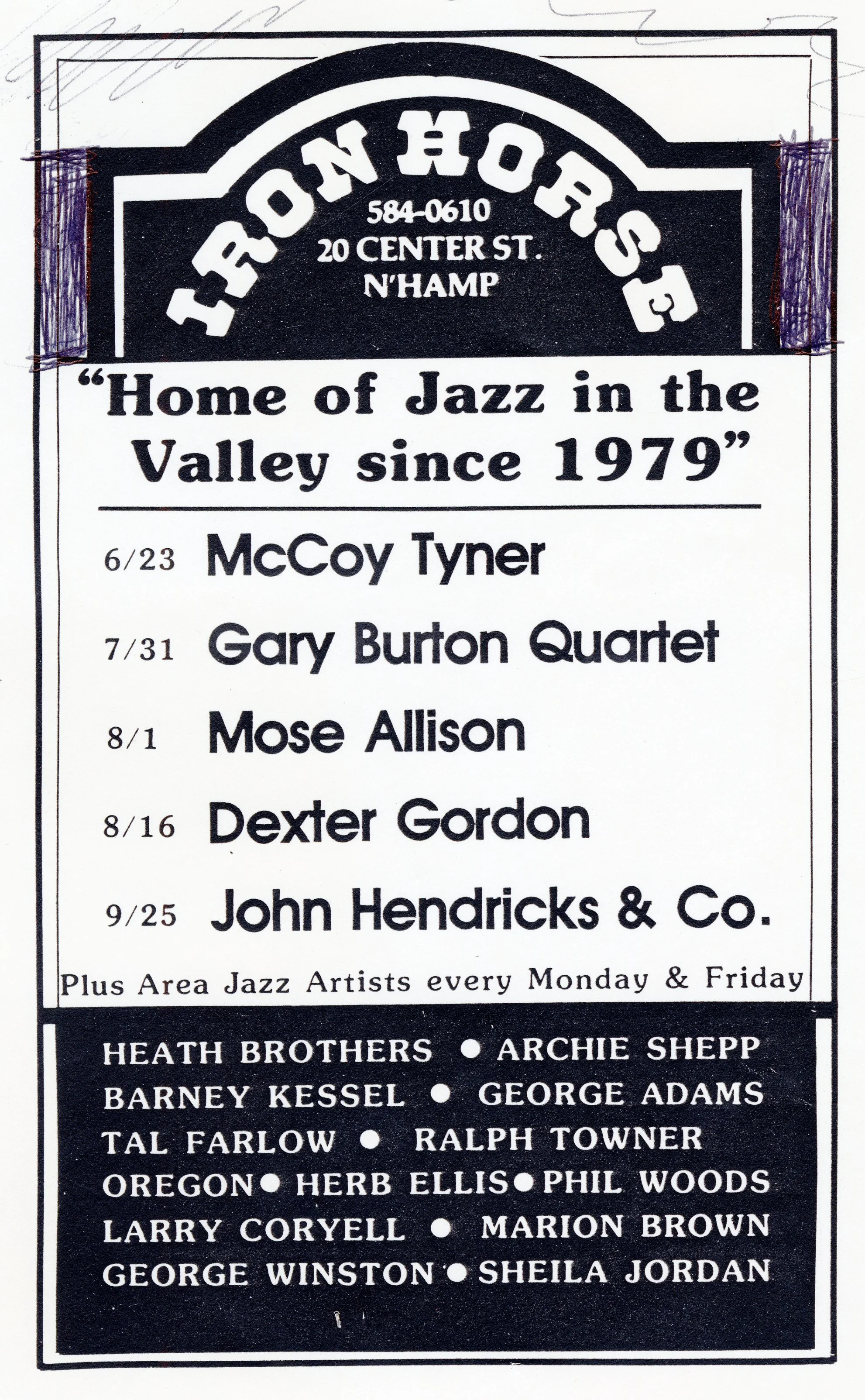
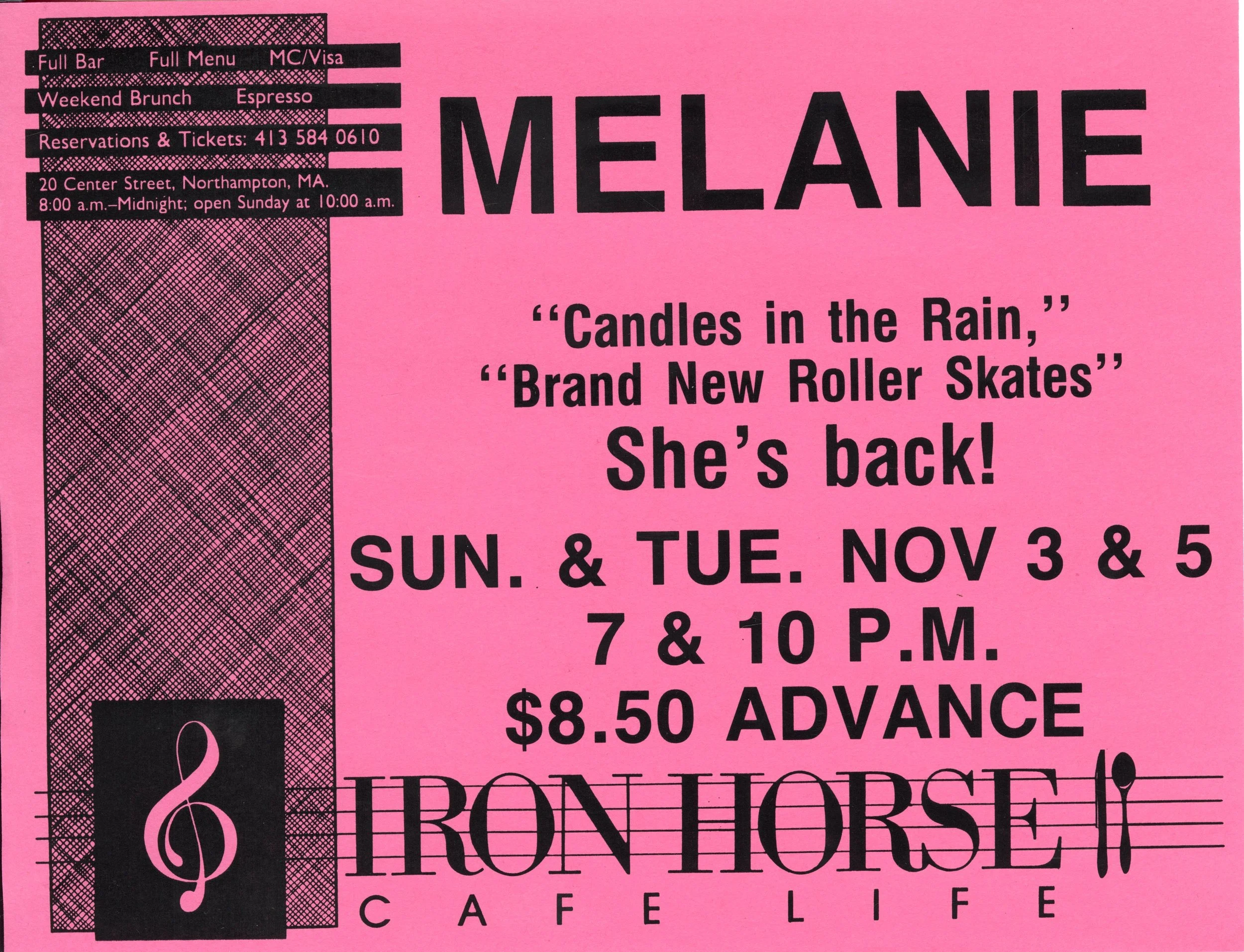
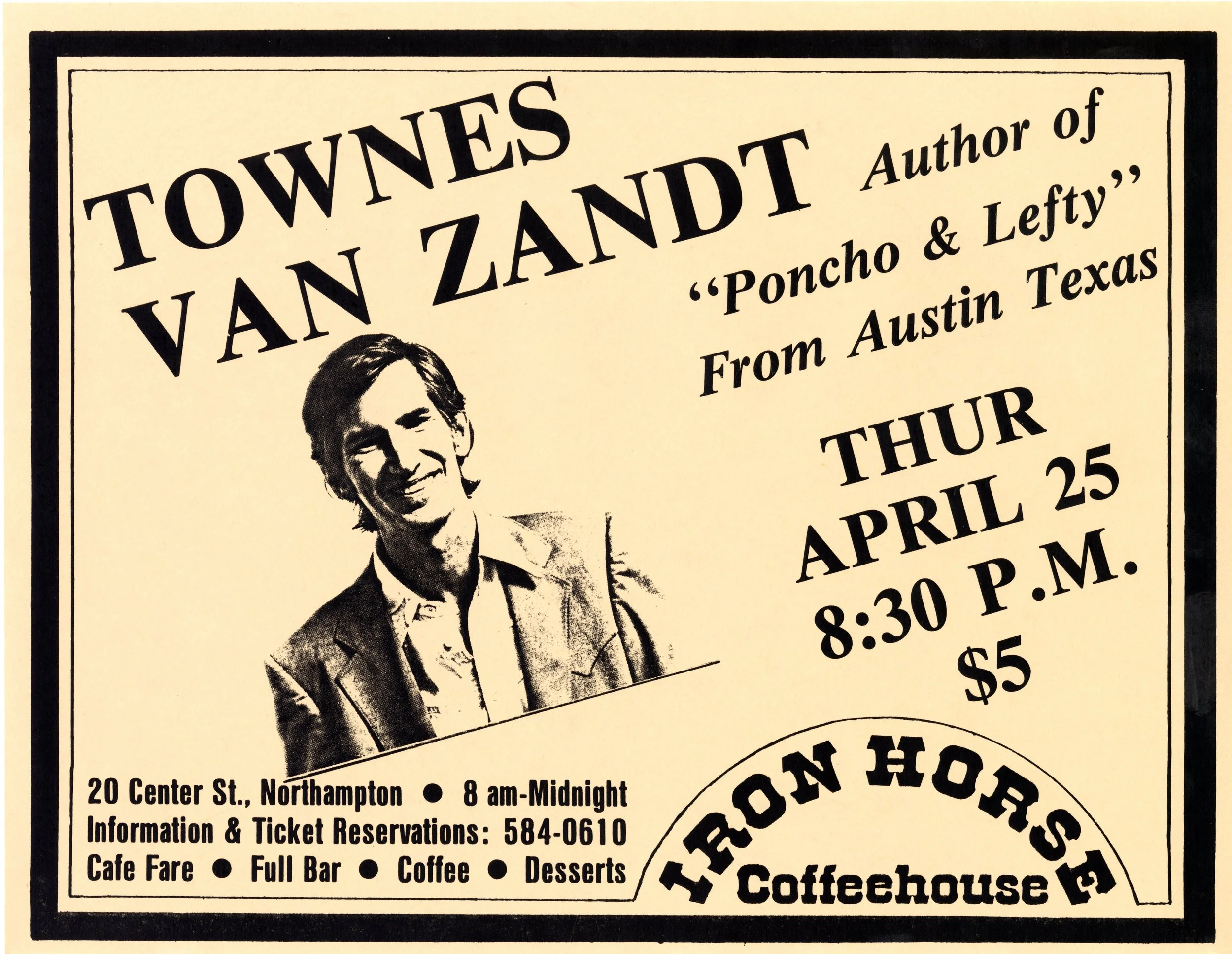
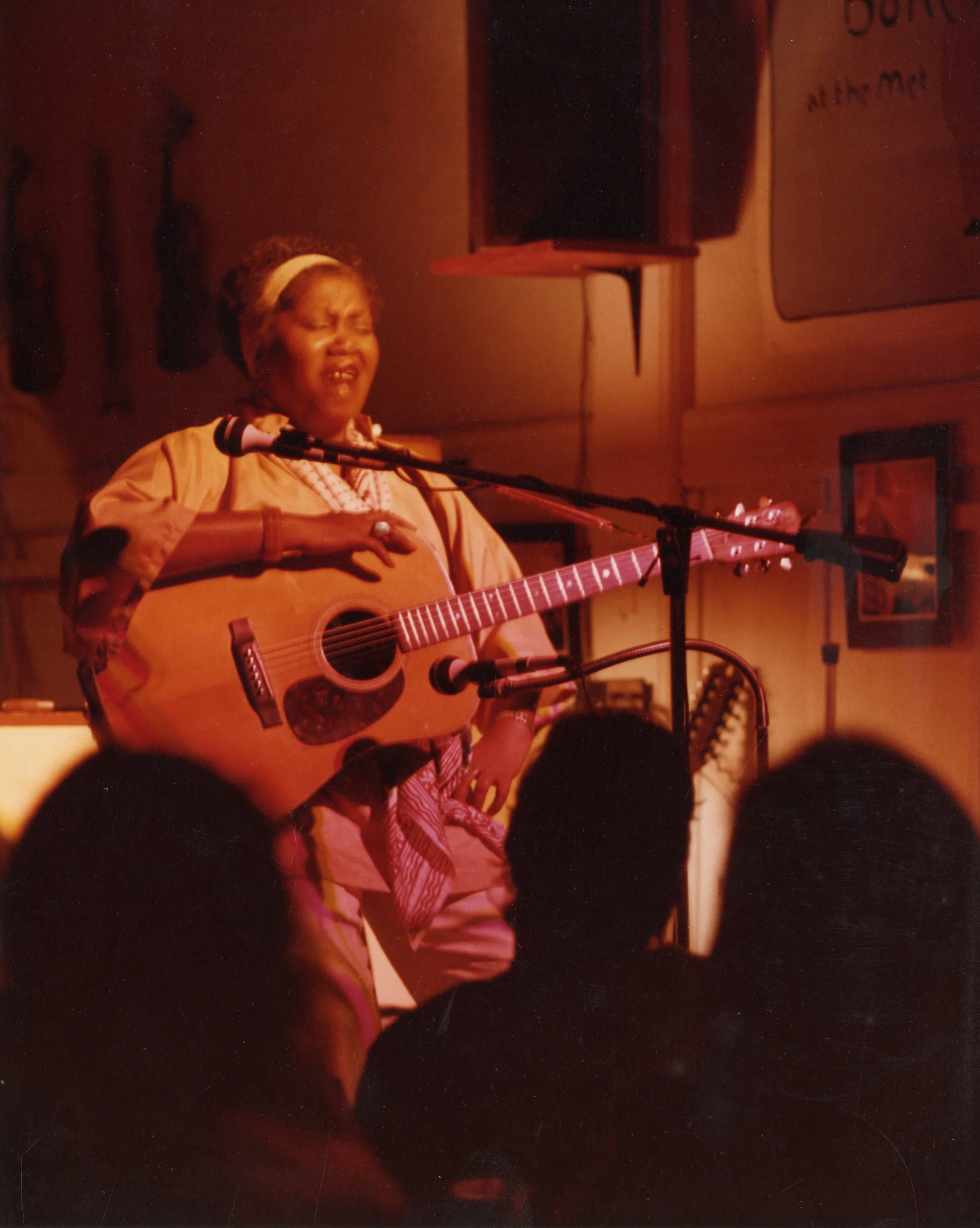
THESE Ephemeral images show the beloved venues storied history – courtesy of the Iron Horse Archive at Forbes Library.
The Beginning OF THE IRON HORSE
After the closings of two Northampton, MA venues – Woodrose Ballroom and The Rusty Nail – community member Jordi Herold saw a need for a gathering space for young, creative people. Alongside his business partner, John Riley, they developed an idea to create a local music space and coffee bar for the community.
The mission: to enhance the health and vitality of the community through the power of music.
Days before opening, Jordi was brainstorming names at his parents’ home when he spotted a welded iron sculpture of a horse, made by his artist mother, and decided on the name. On February 24, 1979, The Iron Horse Coffeehouse opened on Center Street.
Starting with just 60 seats, it was designed for closeness – a room so intimate that artists and performers had to brush past audience members to reach the stage. As Northampton grew into a hub for art and music, so did The Iron Horse, eventually expanding from coffeehouse to music hall. Yet it prioritized holding onto what made it so special: an artist-audience relationship full of connection and intimacy – and it kept everyone coming back.
The Iron Horse Through the Years
1979
"Music Alone Shall Live'' was painted on the wall over the coffee bar when the doors opened. Clanjamfrey played traditional Irish music at the opening. The original space was a long, narrow hall with 17-foot ceilings featuring hand-painted gold detailing that was the pride and joy of John Riley, whom Jordi bought out a year after opening. The first national act was Dave Van Ronk, who drew in others like Odetta and John Fahey.
The 1980s
In the 80s, many people flocked to the area for its culture of art, music and community. Local radio station WRSI The River launched in 1981, serving thoughtfully-curated music programming and forming a partnership with the Iron Horse that continues today. One of the biggest names of the decade was Suzanne Vega, who played songs from her debut album before it was released to large crowds in 1984 and 1985. At one of those shows, she was signed to a record label by representatives who had come specifically to see her at the Iron Horse, drawn by its reputation as an intimate venue unlike any in New York City. Other highlights included Willie Dixon, Tracy Chapman, Tom Paxton, Shawn Colvin, 10,000 Maniacs, and Loudon Wainwright. The club marked its tenth anniversary at the Academy of Music in 1989.
The 1990s
Having expanded into the adjoining storefront in mid-1989, capacity reached 185. The decade's stage welcomed the Smashing Pumpkins, Townes Van Zandt, NRBQ, Alejandro Escovedo, Archie Shepp, Fela, Allen Ginsberg, Tuck and Patti, the Nields, Martin Sexton, and more. The Nu-Wave Cafe series launched, often co-promoted with college stations WMUA (Amherst) and WOZQ (Smith), bringing popular music to the Valley and drawing younger audiences inside.
In 1994, after fifteen years, Jordi sold the venue to valley musicians Jo Thomas and Craig Blaine. Eric Suher purchased it in 1995 and immediately brought Jordi back to book shows. Yo La Tengo, Wynton Marsalis, and Arlo Guthrie were highlights during this period.
The 2000s
Jordi stayed on through 2004 and the Iron Horse continued growing the community through classic and contemporary artists. The early aughts brought Beck and David Byrne while the second half of the decade saw Brandi Carlile, Lesley Gore, Sean Ono Lennon, Ra Ra Riot, and many more. Audience favorites Bill Morrissey, Gaelic Storm, and Tuck & Patti were on stage consistently.
The 2010s
A phrase you’ll often hear in relation to who’s playing at The Iron Horse is “your next new favorite artist.” And this decade delivered. Fitz and the Tantrums, the Lumineers, Lianne La Havas, and Lake Street Dive all played the early part of the decade. The mid-2010s brought Julien Baker, Phoebe Bridgers, Angel Olsen, Courtney Barnett, Chappell Roan, and Maggie Rogers. ODESZA brought their now well-known electronic sound in May 2014, one month after their first festival run. Classic performers Lisa Marie Presley, Peter Yarrow (of Peter, Paul and Mary), and rockabilly legend Wanda Jackson also took the stage.
The 2020s
Before the COVID-19 pandemic shut down The Iron Horse in March of 2020, the venue fit in a few final shows. Most notably, the Black Pumas performed just before their Grammy nomination for Best New Artist. The last show was by folk singer Richard Shindell. Live music was largely paused until The Iron Horse Collective, a newly formed nonprofit, purchased the venue from Eric Suher in late 2023.
The Iron Horse Today
The Iron Horse now operates under The Iron Horse Collective, a 501(c)(3) nonprofit. In early 2024, they spearheaded overdue renovations totaling $1.6M: nine first-floor bathrooms, a new bar, a new kitchen partnership, expanded artist green rooms, and a private artist-only lower level. Capacity is now 300. The venue re-opened in May 2024 to widespread celebration and community relief that this iconic space – built for a thriving community rooted deeply in music – would once again spread music and joy.